


There’s a key core module in the disinfolklore analytical method which is what I call the Code of Positive Trolls. It has six elements. The second element is ethical discipline. The first element is generosity.
When a generous person—or when M’ockers is telling a story, what I might call Infolklore, on Volya 4 Ukraine radio space on X Spaces or Spotify —this is ethically disciplined, in the sense that it’s true. They’re not misleading us. As we all know, those of us who listen to M’ockers, she’s very careful about what she believes and what she lets be said. It’s ethically disciplined.
The standard is set by international law, ultimately, from my perspective. Territorial integrity is sacrosanct. Laws against discrimination on the grounds of certain protected characteristics, the Genocide Convention—one of the most agreed-to conventions in human culture—and a whole plethora of legal instruments which are the expressions of ethical standards. I use that standard, the second element of the Code of Positive Trolls, to distinguish between Infolklore and Disinfolklore.

On the fly, when you’re in your real life and dealing with people—you’re doing a deal, you’re talking about drones, you’re trying to get components, you’re a teacher in school with students firing stuff at you and you’re just trying to work out what’s going on—is this person in good faith?
The first element of the Code of Positive Trolls, which I find particularly useful, is generosity. If I’m picking up genuine real generosity in the other, then I know it’s probably not intentional misdirection. It’s probably infolklore, not disinfolklore. When you pick up a lack of generosity in, say, Donald or others, then you can brand it disinfolklore.
Archetyping Bad Faith
That’s the span between trying to decide in your immediate life whether this is true or not. The definitional disinfolklore is anything Donald says, anything MAGA says. Obviously, until you’ve archetyped them as bad, as not in good faith, you might be confused by little instances. Whereas now we know practically everything he says is bad, yet we still fall for the trolls.
I was watching someone today who always talks about the Ukraine war and the battlefield. They justifiably go off on one and complain about this thing I’ve just spoken about—I skipped over it because I didn’t need to hear them say it as well—where Donald talks about the week and the ceasefire and all that stuff. Then the next story they’re talking about is Donald and the Indian oil deal. We have to try and maintain our consistency between these two manifestations of Donald. If you’ve archetyped him as bad and in bad faith and a con man, then when I find myself falling for one of his trolls—tomorrow he may say, oh, I’m thinking about sending the Tomahawks to Ukraine—we just have to resist falling for this.
We know that everything he says basically is disinfolklore. We don’t know that with other people in our lives, and we’ve all probably experienced situations where you gradually discover someone you relied on and liked and thought was actually in good faith is really spinning lies or tricking you. Then you realise that everything they’ve said is probably what I would call disinfolklore, because it’s not ethically disciplined. It was untrue, it was falsities, it was manipulative—not manipulative in a positive way.
Infolklore Versus Disinfolklore: The M’ockers Example
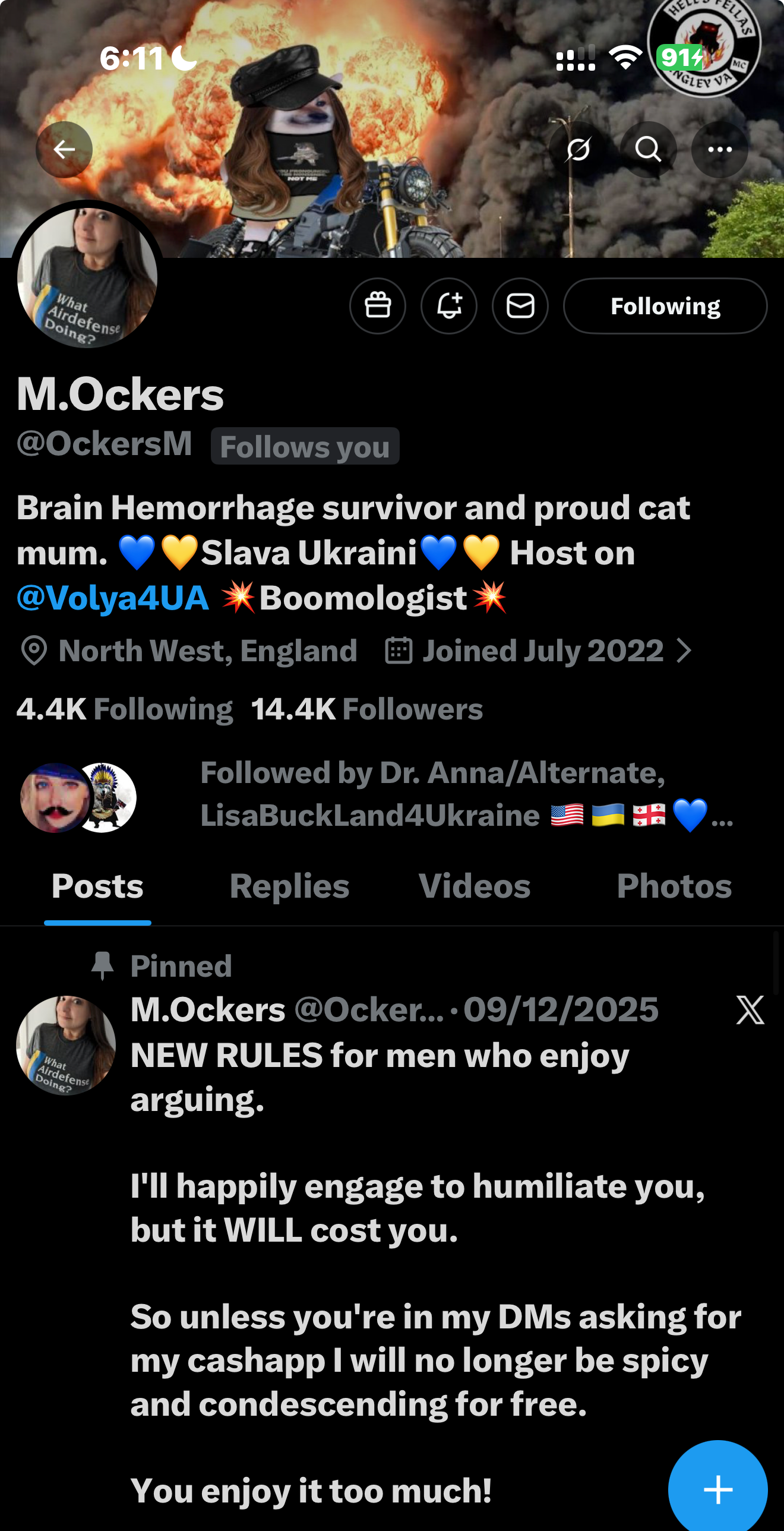
As Bill Terrier says on Volya4Ukraine Radio, the stories which M.ockers is telling are manipulative—stories on multiple layers. The way she tells them, however, the way she frames them, transforms them into infolklore. When she’s telling a tale of woe of some Ruschist mil-blogger who has published a story on Telegram to manipulate people in Russia into sending him money, or like Gherkin forever trying to persuade Russia’s government to do a full mobilisation—that is definitive disinfolklore, and these are the kinds of stories she’s telling.
We can talk about those stories in a conscious way that transforms them into infolklore. We’re certainly manipulating each other by telling these stories, yet we’re not doing it with mean intent. We’re doing it out of generosity—a bit of light relief in the midst of the pain. We’re also raising money. I noted Wendy’s matching in An Accidental Ukrainian, which I very much appreciate.
Re-Archetyping and the Kennedy Center
We are moving towards an answer to a question posed by Scouts and indeed raised by Ioana about what is the truth. What James alluded to is that the truth, in inverted commas, is at risk of being defined by Donald and Donald’s attempts to re-archetype the Kennedy Center and indeed annihilate Kennedy, this hero of his youth that he wishes to destroy. It’s not enough to have RFK Jr. absolutely annihilate the Kennedys from the inside. I note all of the Kennedys’ letters and warnings to Congress not to allow their father, their uncle, their cousin, their brother to become health secretary.
I’m a little bit more optimistic, however. It was a Ukrainian on the series of Ukrainian TV stations that I just recently discovered—and I know Lexicon has as well—broadcasting in English or AI English. There was a Ukrainian academic at an American university I saw this week. He was very certain, and it lodged a nice germ in my mind about how temporary all of this is.
Of course, as James alluded to, it may not become temporary. This may be this attempt to re-archetype reality and turn the world upside down, to turn falsehood into truth for the usurper—the literal and metaphorical usurper Donald. January 6th, whatever happened in the 2016 and 2024 elections with Russian help—the usurper is attempting to turn the world upside down.
The Reformation Parallel
I’ve alluded to this before. I studied in great detail the early transmission of ideas in the early German Reformation, 1518 to 1530, and the world turned upside down. Sebastian Brant’s late fifteenth-century book, The Ship of Fools, played a really big part in the re-archetyping of the Pope as Antichrist and the use of memes and cartoons to re-archetype the church in a certain way, done by the leaders, the oligarchs.
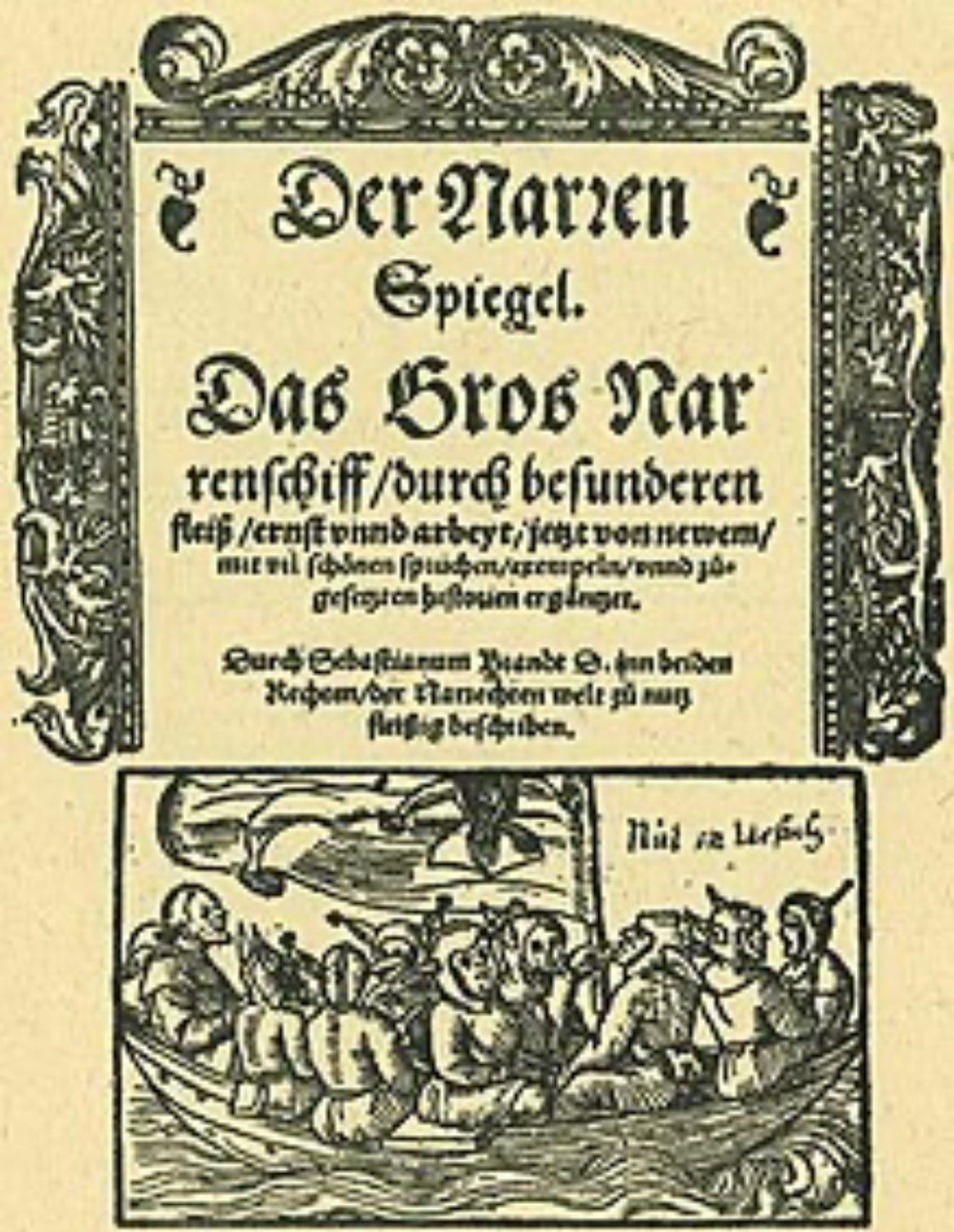
They succeeded in some ways, yet the Catholic Church is still around and there still is truth—there’s truth in all of our lives. I’m quite optimistic. At the moment we’re in the endgame.
I do note the Kennedy Center and what’s going on there. For those who don’t know: he inexplicably tried to fire the board almost immediately upon getting into office. They resisted. In the end, like a steamroller, he got rid of them. Then he attempted unlawfully to rename it the Trump Kennedy Center. He got all his patsies in there—basically the spouses of all his Epstein-connected cabinet members and lawyers and various people are on the board. He controls the board and performers. This Kennedy Center, as I understand it—correct me if I’m wrong, Wendy or James—was established by an Act of Congress to memorialise and commemorate JFK. That’s its sole purpose. It washed its face and made a surplus of something like $40 million last year. Already Donald has tanked it, as he’s tanked absolutely everything he’s ever been involved in.
I do believe underpinning all of this, along with RFK, and all his other motivations, is this idea of annihilating this golden boy of his youth that perhaps someone he hated in his life talked about. He just wants to annihilate all that is good. I don’t believe he’ll succeed. I don’t believe any of them will succeed at this in the end. The end is coming near.
6,000 Years of Indo-European Truth
Part of my confidence in that actually is my perspective from 6,000 years of Indo-European history and the triumph of right and truth. It’s in our language, it’s in our words, in almost every sentence. The repeated attempts, as memorialised in stories about the devil or the snake or whatever, in every culture going back literally for 6,000 years that we have records for—it’s embedded in our language. The word in Hindi and early Indian languages for snake is nāgī. It means negative. This is what Donald and the devil and Satan and Putler and all of these horrific oligarchs, whom the Epstein system has given us a window into, are trying to do. They are the neg, they are the anti—yet I don’t believe they’ll triumph. We’ve got Ukraine, we’ve got President Zelensky, and we’ve got the truth on our side. We’ve got the disinfolklore analytical method and the disinfolklore perspective.
Disinfolklore’s Building Blocks
I was first going to go through just a couple of the tools—very easy snack bites—then go back to the Battling Archetypes aspect, these twelve tools, which is more longue durée work I’ve been doing for the last few weeks.
Are You New to Disinfolklore?
If you’re new to disinfolklore—actually, that’s a bit of a trick question, because if you live in an information-rich environment today, you’re already steeped in disinfolklore. You just couldn’t notice it until I coined the term to describe how strategically targeted memes affecting our attitudes, motivations, intentions, and moods pass through our incoming troll radars to transform our identities in unseen ways.
Now I’ve named it disinfolklore—just as the writers in the Book of Genesis named things and have Adam and God naming things—you can get your eye in and begin to move forward. Be more mindful about how strategically we are being manipulated by disinfolklore masquerading as news, gossip, advice, both in your online and in your real-life lives.
I see news as a province of folklore, as is disinfolklore. Disinfolklore describes stories, however delivered, that communicate meanness with a view to altering the moods, intentions, motivations, and attitudes of their consumers in ways which satisfy the strategic demands of disinfolklorists.
Donald’s Ceasefire Troll
Take today’s Donald. It’s just so horrid what he said about this fake ceasefire. He was asked in the White House: you agreed with Putler on a ceasefire, yet yesterday was one of the worst attacks of the entire war by Putler on Ukraine—what do you say to that? Donald said, well, you know, he agreed a ceasefire from Sunday to Sunday, and yesterday’s Monday, so of course he had to do it. These two people have been fighting forever for the past few years. It’s a war that wouldn’t have happened, you know, and all that malarkey.
That’s pure disinfolklore. It’s pure meanness. It’s both-sidesing Ukraine and Russia. It’s telling lies. It’s not ethically disciplined. It’s part of Russia’s information war against Ukraine.
As we heard Donald Tusk refer to today—which many of us have come to over the past few weeks—the Epstein relationship with Russia, Donald’s relationship with Epstein and Russia, and this entire governance system in which the honey traps affecting the survivors and victims in awful ways were just part of this awful governance system. We get a great insight into it through this English fellow called Peter Mandelson, whom English listeners will know through all the disinfolklore going back to the days of New Labour. It turns out there’s evidence that while the world financial system was about to fall apart in 2007–2008, and Gordon Brown literally saved the world and rescued Mandelson and made him into a lord so he could be his minister, Mandelson was sharing private correspondence about the bailout with Epstein. These are all Brighton Beach mafia-adjacent people. They’re all Russian, despite their all-American looks. This is all a Russian mafia operation. He’s sharing papers which are then monetised by them and exchanged for influence and other things.
That little vignette seems to illustrate how these people are trying to corrupt and usurp our world and usurp what is right. It’s up to us to ensure they don’t succeed, as we’re trying our best with the Ukraine example. I just don’t think it will succeed.
Disinfolklore Is Empirical and Descriptive
When Donald speaks like that, he is communicating meanness with a view to altering moods, intentions, motivations, and attitudes. He’s intending to depress Ukrainians. It’s just the most horrible thing. If there are sins—venal sins, the worst sins ever in the Catholic Church—that can be committed through words alone, then Donald commits them a thousand times a day. At a time when Ukrainians are freezing, he tempts them into going out in the street with this ceasefire troll. I’m sure very few of them believe in it, but it’s just horrible.
If you wonder what disinfolklore is: anything Donald ever says—that is just disinfolklore. News reporting this disinfolklore or any other kind is the main means of creating the disinfolklore universe in which we are currently being enmeshed on an unprecedented scale. This is something I’m offering which many practitioners in disinformation don’t offer: the system-wide effects of not just this particular meme by Donald, but the systemic effects of zillions of them—including the missile strikes, Epstein, Putler, and just the whole mess, this forest of horribleness and meanness that all of us have chosen or been chosen to enmesh ourselves in each day.
We are self-realising through it. We’re trying to help Ukraine, trying to stop the usurpers’ win, trying to help truth—meaning territorial integrity, borders sacrosanct, freedom from being missile-struck, freedom from being enslaved by the Russists and all of the terrible consequences that would arise if the purported annexation of Crimea and all that has happened as a result was allowed to stand.
One: disinfolklore is empirical. This is not a theory. It is empirically based, grounded in data. We see it every day. As James pointed out, you can see a family resemblance between what Donald is trying to do to the Kennedy Center and archetyping, one of the weapons in our arsenal as disinfolklore analytical methodologists.
Two: it’s descriptive. Disinfolklore is meant to depress spirits. It affects motivations in order to entrench in people the idea that it’s useless to resist. Donald himself is very descriptive—his tone, his storytelling technique, switching between third person and other perspectives really confusingly for people, is a really effective storytelling technique. He uses resonant verbal images and props, whether it’s a red cap or other devices. The purpose is clear: to depress spirits, whether it’s the spirits of his cynical followers, oligarchs who seek to benefit, or people like us who are appalled by everything that’s going on.
Disinfolklore as a Way of Seeing
Three: it’s a way of seeing. Once you get your eye in, you can use the disinfolklore lens as a way of perceiving certain kinds of patterns in data.
Four: disinfolklore inculcates rules. It normalises certain mental routines. Don’t go to the forest. Don’t bother supporting Ukraine. You’re not Ukrainian. Cross the river and you’ll be forced to become LGBTIQ. There are all these rules, unknown to us, inculcated in our minds through the means of certain strategically designed, emotionally resonant stories. This is a feature of folklore going back forever. One of its great functions is to teach children: don’t go to that forest, don’t go to the island.
Five: it’s also a description of my project. Disinfolklore is a necessary precursor to understanding what counter-disinfolklore consists of. All of this is about—and I try to remember this in my work—not just identifying or describing something terrible and going, oh, I can’t do anything about it. It’s about acting as well. That’s the counter-disinfolklore. All of us have chosen that path, all of us in this space. In the pro-Ukraine community, those who identify as part of NAFO and Volia Radio—we have chosen to counter disinfolklore, to act against it, not just to be consumers of it and throw our hands up and say, okay, I can’t do anything about it, so I’m not going to bother. We’ve chosen to engage in memetic warfare in lots of different ways.
The Intention Problem: Why Effects Matter More
Traditional definitions of disinformation distinguish it from mere misinformation on the grounds of intention to mislead. The problem here is that the same meme, when spoken by me, if I am being *méchant* and deliberately trying to mislead someone, would be disinformation. If Wendy accidentally believed it and just passed it on to James, it would be just misinformation. Its effect is the same if James then passes it on. It doesn’t matter if I’ve deliberately manipulated James and Wendy has accidentally manipulated James. If James then tells his sister or his daughter or his mother, his wife, a cousin, or says it on the radio—the same meme—it doesn’t matter whether it’s intentionally or unintentionally communicated. It’s still alive, it’s been passed on, and the energy inside that meme stays alive.
If we’re truly most concerned about all of this because of its effects—we’re not just interested in disinformation or Ukraine to pass the time. It’s intrinsically interesting, of course, yet we’re also interested because of its impact on people, on their moods. We see what it does to people. We see how Donald has affected all American and practically everyone’s lives on the planet. The same with Putler’s invasion of Ukraine, whether it’s the price of oil or our depressed spirits or 14 million Ukrainian internally displaced people and 9 million who left Ukraine. These have great effects.
It doesn’t matter in some ways about the intention. We can argue all day about Putler’s real intention, yet that doesn’t really matter. What really matters is the effects. That’s where what I try to provide comes in: look for the mana in the meme. That’s one of the main weapons, tools, and unique aspects of the disinfolklore analytical method. We take units of information and attempt to discern the quality of the mana inside them.
Look for the Mana in the Meme

As we get better at this—and the first step to getting better is just thinking about doing it—then whether James communicates this meme to me, passes it through the barrier into my brain, into my mind, to kind of tickle my mind, or Wendy does, it doesn’t matter whether James intentionally is manipulating me or Wendy is accidentally manipulating me. If we’ve got this skill of looking for the mana in the meme, looking for what the energy is inside it and how it is affecting my mood, my intention, my attitude—many of us, because we see the family resemblance between different kinds of memes, like the nuclear threats for instance. It doesn’t matter whether it comes from Medvedev or our friend who’s breathlessly repeating something they read in the *New York Post*. We see the energy in this, which is Russia’s attempt to coercively control humanity and get us to surrender to Russism.
That’s a really powerful aspect of disinfolklore: looking for the mana inside the meme.
Disgust as an Incoming Troll Radar
Once we’re looking for it, we can create different tools for identifying the energy inside memes. One of the key tools is actually its impact on us. When I heard Donald say this about the ceasefire—and I hope I’m now passing this on to all of you, trying to wrap it so that it’s not just disinfolklore but more infolklore, it’s informing you, a story to inculcate an idea—my emotional visceral reaction was just disgust. Disgust is, of course, one of the tools that Donald and his ilk use. We’ve spoken about this before, especially in the context of contagion. There’s this work by cultural psychologists about how the emotion of disgust, so it is believed, began as a mechanism we use biologically not to drink the poisonous soup, to puke it out or vomit it out. Then it passes from that into culture, and we begin to project disgustingness or non-disgustingness onto different articles or objects.
MAGA attempts to get us to think of Hunter Biden or Hillary Clinton as disgusting—the whole Pizzagate thing. Food is intrinsically involved in all of this. When she’s associated with this dark cabal of child slavery, all located in this pizzeria in Washington, D.C., this gets entrenched in people’s minds through disinfolklore, through stories promoted by Fox and through a million different channels. Then you don’t even remember why she disgusts you, yet you sense or feel that disgust.
The moment I felt that disgust with Donald, that reaction on behalf of 42 million Ukrainians and 350 million fellow Americans, my incoming troll radar was activated. I realised: I’m not going to go with this feeling. I’m not going to go with this disgust. I’m going to use it as an example tonight. I’m not going to allow Donald to impact my mood. I’m going to bank it, put it in a little capsule in my mind, then move on from it. Very little of what he does disgusts me in this visceral way, yet that really did because I’m reading about what Ukrainians are going through at the moment—it’s horrific—and just the idea he could explain it away as natural. He lies about the ceasefire, then says, well, you know, it was Sunday to Sunday, so it’s Monday, so obviously he’s going to send his missiles. It’s probably top three worst things a US president has ever and will ever say.
The disgust I felt alerted me to a troll. Someone is trying to get into my mind and I’m going to protect myself from it. That was wrapped up inside his story about missiles and Putler. Incidentally, this was minutes before he took a dump in the Oval Office—yet again, a public defecation with people around, and they hurried everyone out. That’s good counter-disinfolklore. We cannot resist opportunities for toilet humour, especially when this is one of many times he has apparently done this in public.
The Mana of Coercive Control
The energy of Russia’s disinfolklore is coercive control. The mana energy from the macro to the micro—the words of individual Russist so-called mil-bloggers, Russian guys in the field who hang the Russian mobiks upside down on trees—that’s the epitome of coercive control. The way they treat women. The way Epstein and all of those people, all the people in Donald’s cabinet, treat women. The way Donald treats women and people he others.
That coercive control mana energy is inside the memes, inside what they do, inside the stories, inside the way they treat the survivors, as we see with the latest docs dump.
The mana of Russia’s disinfolklore is coercive control. You can back-propagate from that: if you spot coercive control—which is quite carefully defined in English law because it’s now illegal, and which we might know in different ways, having experienced it in our own lives with partners or girlfriends or boyfriends, husbands or wives—there’s a certain level of intensity of coercive control in relationships, usually male on female, that in English statute law is now outlawed.
If you see coercive control in a meme or in a story—either someone trying to coercively control you, or Donald trying to coercively control Ukraine into surrender by withholding intelligence cooperation (forcing them to withdraw from Kursk and all of this), the “perfect phone call” in air quotes, where he was coercively controlling President Zelensky into announcing an investigation into the Hunter Biden troll in return for $280 million worth of Javelin missile systems which Congress had already appropriated specifically for Ukraine, plus a White House visit—that’s coercive control.
The Budapest Memorandum specifically makes it a violation to exert economic coercion on Ukraine by any of the parties, whether England, the Russian Federation, or the United States. Yet we see this normalisation of economic coercion by Donald—tariffs are a form. His whole tariff troll is a form of coercive control, not just on other countries but also on the Americans who are paying the tariffs.
Coercive control is immanent in almost every breath Donald takes as a case study. Once you can see it in him and what he does, you can see aspects of it in what other normal people do, in geopolitics, in what Putler does. Whenever you encounter that energy in memes, you know that’s probably disinfolklore. Someone is probably trying to affect your mood, your motivation, your attitude, and your intentions through a story whose immanence is coercive control.
Coercive Control as a Shortcut
That’s one very common immanence in disinfolklore. If you’re looking for the mana in the meme—the energy in a meme, whether it’s a story someone is telling you, a story you’re participating in with a friend, something on Twitter or X or Instagram Stories, or images, or something you think about—when you identify this aspect of coercive control, you have a shortcut. Often these judgements need to be made quickly in real life. I want the disinfolklore analytical method to be something we can use individually, as I do, in my daily life to get me through the day and to help me navigate very complicated realities.
We’re looking for ways of cutting through the confusion. You’re looking for the mana of the meme, you spot coercive control, then you mount your defence or your counterattack—or you just get out of there. You don’t need to spend three days trying to work out what’s going on. You simply recognise: this is not a story I want to let affect my energy. I don’t want how I act to be changed by this, because someone is deliberately trying to coercively control me into behaviour which is against my identity.
If I allow myself to be coercively controlled—and obviously there are circumstances in which we all have to surrender to it because we’re just not powerful enough to resist at that moment—that doesn’t mean we can’t try to recognise it. Epstein’s victims and Donald’s victims often understand they’re being coercively controlled, like we do, like I do now. We just can’t do anything about it for the time being. We have to wait till we get a bit bigger and find a lawyer or something else.
We can keep our identity—help sustain our identity—by noticing what’s going on and by mentally resisting. If we do find the power to overcome it, that is an identity-preservation process. The opposite is what I’ve described before: the purpose of the disinfolklore universe inside MAGA or inside Russia-occupied Ukraine is to transform our identities through the medium of our moods, intentions, attitudes, and motivations by using stories to attack them and manipulate us—to pulate, to shake our mana, our own energy.
After a time, we’ve acted in ways we would never have dreamed we would act. Take your average MAGA adherent and bring them in your time machine back to 1990 when they were a Reagan Republican. They would never have agreed with any of the nonsense they agree with now. Identities are transformed through these memes deliberately. Donald and Putler and those trying to change our world are trying to promote this spheres-of-influence nonsense from their IR textbooks, rather than territorial integrity being sacrosanct according to the UN Charter and a variety of international legal instruments, as well as being the obvious means of maintaining stability in our world.
The Cognitive Model: Information as In-Forming
I’ve described a bit now the cognitive model of how disinfolklore affects our intentions and motivations, and therefore our activities, including our thoughts. This is a key part of the disinfolklore analytical method. As James pointed out, there are loads of other models out there. This is just the one I’ve come up with to match my experience of how my mind, my mana, my energy is impacted by meanness in stories.
It’s also something I’ve developed which I hope is accessible to people. When we detect trolls coming in—detect this energy, say, of coercive control—or we have a sense that someone is trying to manipulate us, we mount our incoming troll radars, always looking for this. Mindfulness is another word for it, though that kind of puts people off. It’s this mindfulness where you’re a gatekeeper between the external and your mind, and you triage certain bits of information according to their risks of negatively impacting your mood or your attitude or your intentions. When you detect coercive control in any form, immediately you’re on guard, and you’re not going to let it affect your inner mind, your mana.
When you feel your moods or attitudes or intentions being scraped or vibrated by these things, these data, these memes, that can also be a sign that it’s time to—metaphorically speaking—get out of there and just not let it in and avoid it.
I think it’s important to have an accessible cognitive model when we’re talking about information. The clue is in the term itself: information. It’s about forming you. It’s forming the inside of you. This is one of the beautiful things about Indo-European languages. We have really true renderings of what is happening in the words we use every day, yet we don’t think of it that way. We think of “inform” as merely meaning somebody is telling us something we didn’t know. The clue, when you think about the term, is that it’s forming our inside.
That’s what I mean by the energy, the being manipulated, where someone is pulating your mana, your energy, with information, shaking it up and down in such a way that it affects your moods and intentions in the negative way. The opposite works too. I’ve been noticing a lot how children react—for some reason it’s just been on my mind—the way they make each other laugh. I’ve got my eye in now and I see it a lot on the streets. That kind of friendship is really familiar to me, and I try to do that in my real life a lot.
That’s positive trolling—definitional positive trolling—where two friends are just making each other laugh and smile. They’re practising generosity by doing that. Their intention is all good. I think that’s absolutely wonderful. That is great counter-disinfolklore. That’s positive information.
I’ll come back to that again next week. Hopefully that was helpful. That was eight different tools. I’ve actually got 37 more.
Continued from:
Podcast and Pensées 128:

Pops up with a perennial troll where you're in the countryside, something strange happens, and it's attributed to a troll appearing and interceding, which perform the same function as angels or leprechauns or banshees or Baba Yaga or Rusalkis. It's all the same. Every Indo-European culture has these substitutes for energy and to explain things.
First in Series:


